
Collaboratory 2026 PhD Project
Key Details
Project Title: Seasons of Wellbeing: Improving the health and wellbeing of the Beaumont Leys community through the great outdoors of Bradgate Park
Deadline:11:59pm, 30th November 2025
Host University: University of Leicester
School/department: School of Geography, Geology and the Environment
Start date: Wednesday 1st April 2026
Funding offer: Tuition fees covered in full (worth approx. £15-17k across full PhD programme). Monthly stipend based on £20,780 per annum, pro rata, tax free.
Working hours: Full-time (minimum 37.5 hrs per week).
Working style: Primarily in-person at host university. Flexible working supported. Working pattern to be agreed between successful candidate and lead supervisor.
Project Supervisors
- Lead Academic Supervisor: Dr Tess Osborne (University of Leicester)
- Academic Co-Supervisor: Dr Mark Charlton (De Montfort University)
- Academic Co-Supervisor: Dr Danny Longman (Loughborough University)
- Community Supervisor: Dr Jack Matthews (Charnwood Forest Geopark)
About The Project
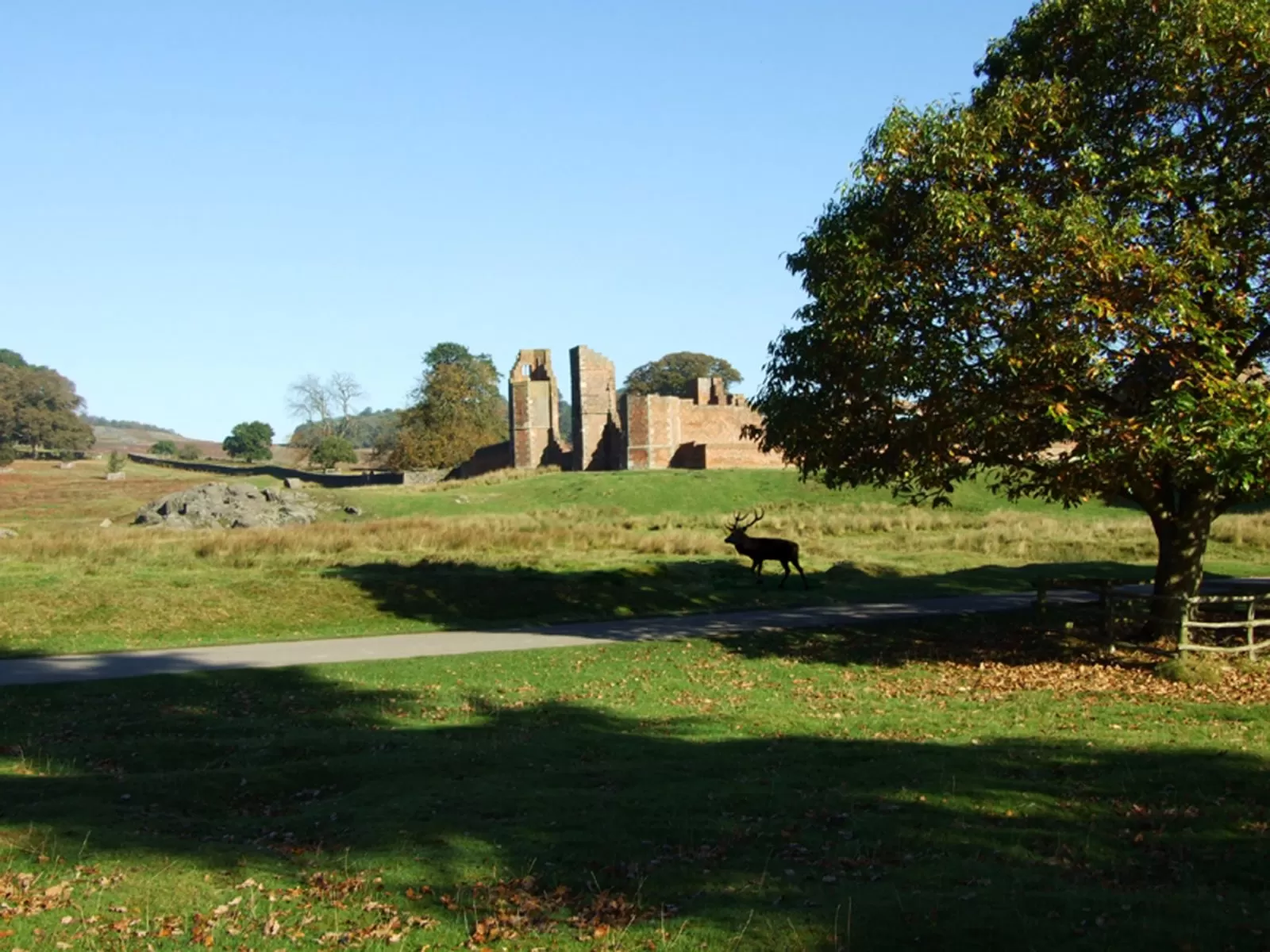
The mental and physical health benefits of exposure to natural environments are well documented. However, it is unclear what prevents people, particularly those from socially disadvantaged backgrounds, from visiting and benefiting from nearby green spaces. Furthermore, a detailed understanding of the interaction between psychological and physiological responses to nature exposure, and how this may vary with seasonality remains absent. This project explores these questions with residents of Beaumont Leys, a large and diverse Leicester ward where health outcomes are poorer than the city average and where demand for affordable, non-clinical forms of mental health support is high. Just a short distance away, Bradgate Park offers open spaces, woodland and historic landscapes. This site was recently designated a National Nature Reserve because of its internationally significant geology, and yet little is known about whether and how residents use it, what barriers influence access and how seasonal changes shape experience.
This PhD project addresses current knowledge limitations by combining novel methods to capture how stress and relaxation fluctuate during park walks across the seasons. Participants will take part in GPS-tracked walking interviews in Bradgate Park while wearing lightweight sensors that record automatic physiological responses (e.g., heart rate). This approach generates a layered account: physiological signals of stress and recovery set alongside lived narratives, sensory descriptions, and seasonal reflections.
Citizen science is embedded throughout: residents will co-develop research avenues, help pilot tools, and take part in interpretation workshops to make sense of patterns in locally meaningful ways. Indeed, the methodological innovation of the project will provide a novel insight into how nature-based interventions can be designed to reduce health inequalities and possibly strengthen community wellbeing, whilst also contributing further to the discourse on ‘Go-Alongs’. The findings will support local initiatives and guide practical interventions, such as improving accessibility and safety, and developing community-led programmes that encourage participation.
This project has been co-created with and is supported by researchers from the University of Leicester, De Montfort University, and partners at Charnwood Forest Geopark. The successful candidate for this project will be enrolled at The University of Leicester.
Project Aims
The overall aims of the project are:
- To examine community perceptions of access and identify social, cultural and practical barriers that limit engagement.
- To explore embodied and seasonal experiences of Bradgate Park through qualitative, spatial and physiological methods .
- To co-produce recommendations with residents and local organisations on how access to Bradgate Park can be sustained and enhanced.
Core Competencies
Category | Competencies | Assessed: Application (A), Interview (I) |
Comprehension and evaluation | Strong understanding of the project and its subject matter. | A / I |
Analytical, researcher mindset with keen attention to detail. | A / I | |
Communicate complex concepts with clarity and precision. | A / I | |
Able to identify connections, patterns, gaps, and irregularities in information/data. | I | |
Able to interpret data/information confidently with logic and empathy to derive meaning. | I | |
Social and emotional | Demonstrable experience of responding effectively to changing contexts, information and demands. | A |
Ability to persevere in the face of challenges/failures and to remain constructive in developing solutions. | A | |
Demonstrable passion for learning with clear drive and curiosity to undertake this specific research project. | A / I | |
Willingness to immerse oneself in the research subject matter and make a contribution to new knowledge through a PhD. | A / I | |
Strong desire to make a positive community impact through the research. | A / I | |
Willingness to think deeply about complex concepts and engage with academic ideas and theory. | A / I | |
Preparedness and potential for success | Experience of working, collaborating and communicating effectively with different stakeholders. | A |
High level of self-motivation and ability to work with minimal guidance. | A / I | |
Strong organisational and time-management skills with the ability to balance and prioritise multiple tasks. | A / I | |
Ability to identify potential challenges and complexities and thoughtfully consider possible solutions. | A / I | |
Able to identify the technical, personal, or professional skills required for a task and take action to develop these. | A / I | |
Community Context | Genuine desire to undertake community-engaged research over more traditional approaches to research. | A |
Understand the impact of and need for the inclusion of diverse experiences and points of view in research. | A / I | |
Appreciation/understanding of the importance of community insight and experience in the generation of new knowledge. | A / I | |
Awareness/understanding of the broader societal context related to the subject matter of the project. | A / I |
Project-Specific Competencies
| Essential | Assessed: Application (A), Interview (I) | Desirable | Assessed: Application (A), Interview (I) |
|---|---|---|---|
| Strong communication skills, with the ability to listen carefully and engage respectfully with people from diverse backgrounds. | A / I | Experience of community engagement, for example, volunteering, outreach, or working with local groups. | A / I |
| Willingness to work collaboratively with community organisations, local authorities, and academic partners. | A / I | Interest in health, wellbeing, or environmental issues, demonstrated through study, work, or personal projects. | A / I |
| Capacity for independent learning and problem-solving, including adapting to challenges in fieldwork settings. | A / I | Knowledge of Leicester or similar urban communities, especially around issues of health and inequality. | A / I |
| Basic digital literacy, including the ability to use everyday digital devices (e.g. smartphones, tablets, or GPS-enabled tools). | A / I | Teamwork experience in interdisciplinary settings, bridging different perspectives or sectors (e.g. health, environment, community). |
References for Further Reading
- Alcock, I., White, M.P., Wheeler, B.W., Fleming, L.E. & Depledge, M.H. (2014) Longitudinal effects on mental health of moving to greener and less green urban areas. Environmental Science & Technology, 48(2), pp. 1247–1255. https://doi.org/10.1021/es403688w
- Bell, S. L., Leyshon, C., Foley, R., & Kearns, R. A. (2019). The “healthy dose” of nature: A cautionary tale. Geography Compass, 13(1), e12415. https://doi.org/10.1111/gec3.12415
- Leicester City Council (2022) Health and Wellbeing in Leicester. Leicester: Public Health Team. https://www.leicester.gov.uk/anti-poverty/health-and-wellbeing
- Maas, J., Verheij, R.A., Groenewegen, P.P., de Vries, S. & Spreeuwenberg, P. (2006) ‘Green space, urbanity, and health: how strong is the relation?’, Journal of Epidemiology & Community Health, 60(7), pp. 587–592.
- Marmot, M., Allen, J., Boyce, T., Goldblatt, P. & Morrison, J. (2020) Health Equity in England: The Marmot Review 10 Years On. London: Institute of Health Equity. Available at: https://www.health.org.uk/publications/reports/the-marmot-review-10-years-on
- NHS England (2022) Green Social Prescribing. Available at: https://www.england.nhs.uk/personalisedcare/socialprescribing/green-social-prescribing/
- Ngom, R., Gosselin, P., & Blais, C. (2016). Reduction of disparities in access to green spaces: Their geographic insertion and recreational functions matter. Applied Geography, 66, 35-51.
- Osborne, T. & Jones, P. (2017) Biosensing and Geography: A Mixed Methods Approach, Applied Geography, 87, 160-169. https://doi.org/10.1016/j.apgeog.2017.08.006
- Shanahan, D.F., Bush, R., Gaston, K.J., Lin, B.B., Dean, J., Barber, E. & Fuller, R.A. (2016) Health benefits from nature experiences depend on dose. Scientific Reports, 6, 28551. https://doi.org/10.1038/srep28551 United Nations (n.d.) Sustainable Development Goal 11: Sustainable Cities and Communities. Available at: https://globalgoals.org/goals/11-sustainable-cities-and-communities/