
Wednesday, 15 April 2026
By Jack Benjamin
Collaboratory PhD Candidate
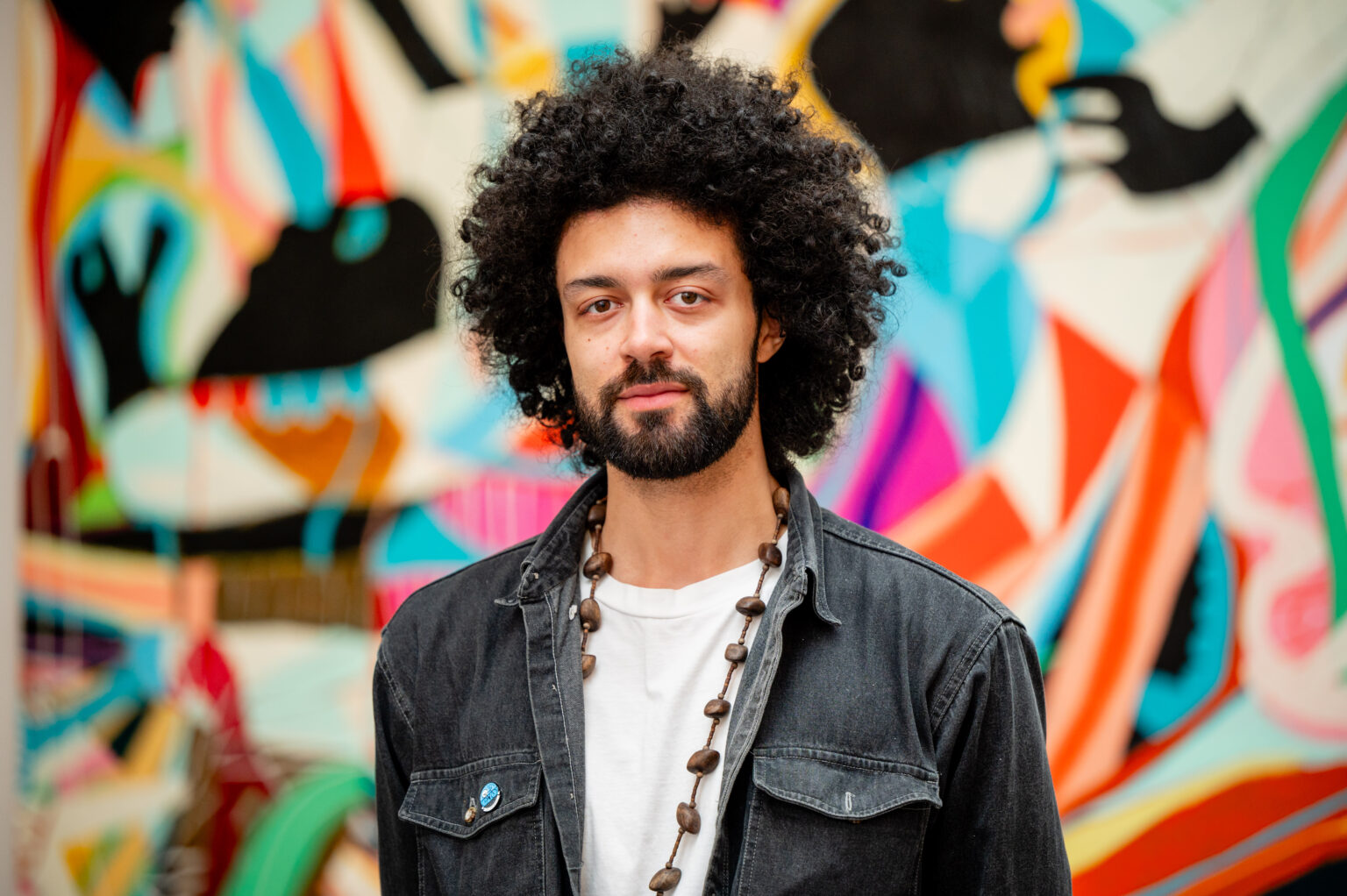
Jack Benjamin, New Arts Exchange, Nottingham
Do you call it a cob, a barm, a bap, a roll, or a bun? Does it matter to who you are?
In what way does the way you speak and communicate make up your identity and sense of belonging? Does it make you think about how you talk at home, with family and relatives? What about when you text with friends? Do you change the way you speak with colleagues to sound more professional? If you are into sports, do you know all the words off by heart to your local team’s anthems? Do you feel strongly about what exactly to call a bread roll? Or does your language or dialect ever make you feel deeply connected to a place, close or far, going back multiple generations? Regardless of who we are, languages, accents, and dialects play a significant role in our day-to-day lives, and our language heritages are a large feature of it.
What we hope to find out and why
My research works directly with Nottingham’s communities, specifically, grassroots organisations, arts and cultural institutions, and schools, to test, develop, evaluate and share the potential ways to support the city’s many language heritages (including dialects, accents, and multilingualism). The research aims to help safeguard, engage and celebrate language heritages, as well as to cultivate awareness of local living cultures, to collaborate with and support Nottingham communities, and create new knowledge about how to do this in an accessible way at a strategic level.
Importantly, the idea that we bring together communities to support and celebrate the culture and heritages they already own is a fundament aspect of this research. We are all co-producers of living knowledge and cultures that have the right to be recognised and celebrated alongside things like stately homes, statues, and marvels of historical engineering.
The timing of the research is significant, as following the 2024 UK ratification of the UNESCO 2003 Convention for Safeguarding Intangible Culture Heritage, the UK Department for Culture, Media and Sport has recently begun accepting community submissions to inventory UK living heritage. However, the UK government has yet to express any interest in developing and maintaining any future frameworks to safeguard UK living heritages. Existing research, however, has demonstrated the significance of language heritages to individual and community identity, wellbeing and intergenerational cohesion.
Following several months of fieldwork, visiting sites, interviewing participants and running creative focus groups with young people across Nottingham, my research is showing signs of exciting things to come.
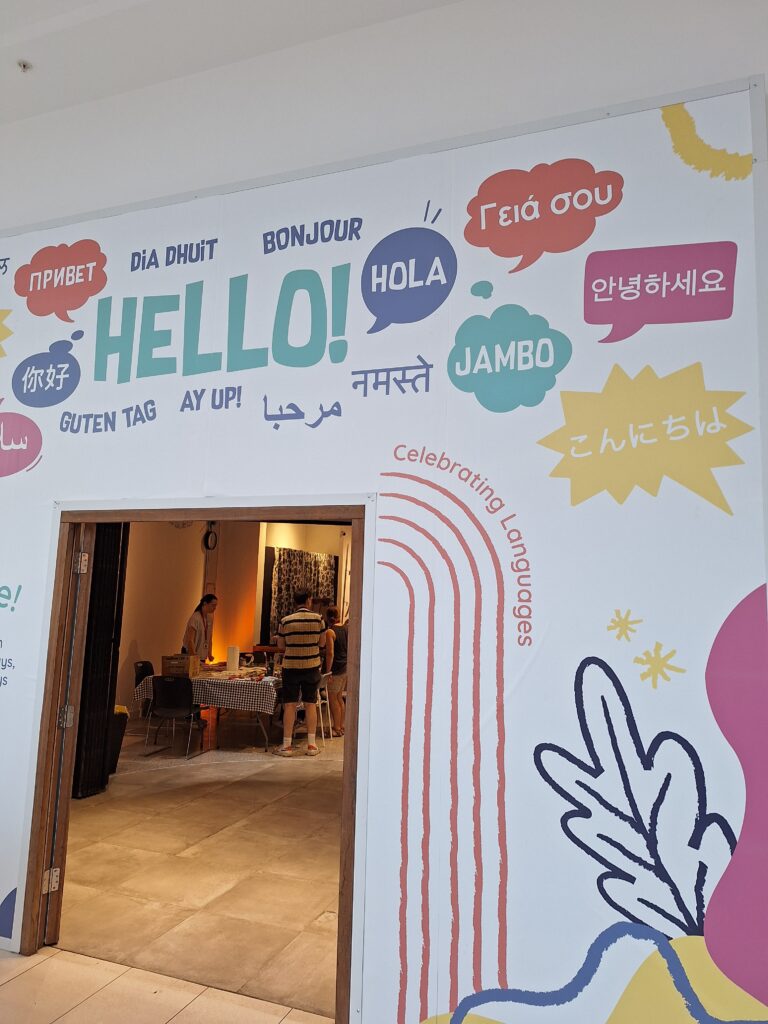
A multilingual sign (featuring Nottingham dialect) outside a pop-up activity shop for young people in Nottingham
Classrooms, theatre productions, pop-up exhibitions and more.
Throughout 2025 and early 2026, I had the opportunity to make several site visits across Nottingham to meet with a range of people, such as headteachers, gallery directors, heritage school volunteers, primary and secondary school children and many more. The purpose of my visits was to collect ethnographic data (write fieldnotes, take photographs, collect promotional materials, observe workshops for the public, etc.). By capturing the holistic essence of a space, I aim to identify and analyse the assets available within an organisation to support living heritages. Practising ethnography and participating in activities over several months resulted in me and the research becoming less distant and more familiar with the participants; I was able to build trust, demonstrate transparency, and foster sustainable relationships across the project timeline.
Ethnography that is participatory, reflective, and autoethnographical is a crucial aspect of my work; these approaches demand us to actively and continuously conduct ethical, impact-driven, engaged research. This is especially important when working with a range of community groups and organisations, particularly at the local level.
My project applies bottom-up, open and collaborative approaches to conducting civic-engaged research that supports community interests;researcher biases and subjective perspectives have the potential to lead to extractive and exploitative practices and actively working to avoid these issues is an important consideration. As my position to the research topic is so close (I am from Nottingham, I speak several languages, and have a professional creative background), it was essential that this is acknowledged within the design, planning, implementation and analysis of my research.
There are many ways to use and evaluate ethnography, and there is a wealth of literature available to us. However, researchers wanting to use forms of ethnography at the local level in their work can consider some of the following to include in their research:
- When recruiting participants/organisations, find accessible ways to communicate the purpose, aims and timeline.
- Design, plan, conduct and analyse ethically: find the best platform for you to work reflexively (journal, video blog, collaborative autoethnography etc.). Make a positionality statement from day one of your project and be transparent about you in relation to your research.
- Recognise the boundaries of conducting ethnography and link your data collection to your methods – what do you need to capture, for how long, and use reflexive practices to check your (potential) insider-outsider position.
‘‘I’ve put ‘English’ in my mouth because that’s what I speak mostly, and then ‘Arabic’ in the middle, because that’s what I speak at home’’
Following my site visits, I also individually interviewed people who use those spaces, and I ran focus groups with pupils across several schools. The purpose of these conversations was to hear directly from participants and attendees on the themes of the research. Taking a semi-structured approach to the interviews and focus groups was important and beneficial, as the participants held different roles and/or varying levels of engagement at the participating organisations; no-one fit structure would be appropriate to capture the range of perspectives and experiences. Due to my proximity to the research topic, I had the opportunity to impromptu discuss topics such as Nottingham language (e.g., what did they think about colloquial words like ‘mardy’), and this resulted in further conversations around place, belonging, community and more. In line with open research practices, I continued to keep the progress of the research transparent and collaborative by sharing the pseudonymised transcriptions with the participants to check they were happy I had not misunderstood anything we had discussed during our recorded interviews
Creative approaches, such as designing and drawing body language maps, were also used during the focus groups with school children. Using creative approaches is a fun, evocative and engaging way to get participants to share their experiences and reflect in ways beyond questionnaires and interviews. This approach was also useful as it provided an accessible, inclusive and adaptable way for audiences with a variety of language heritages to get involved. Besides providing visual data, a creative-arts based approach also provided me the opportunity to develop probing questions leading to further in-depth qualitative data for analysis.
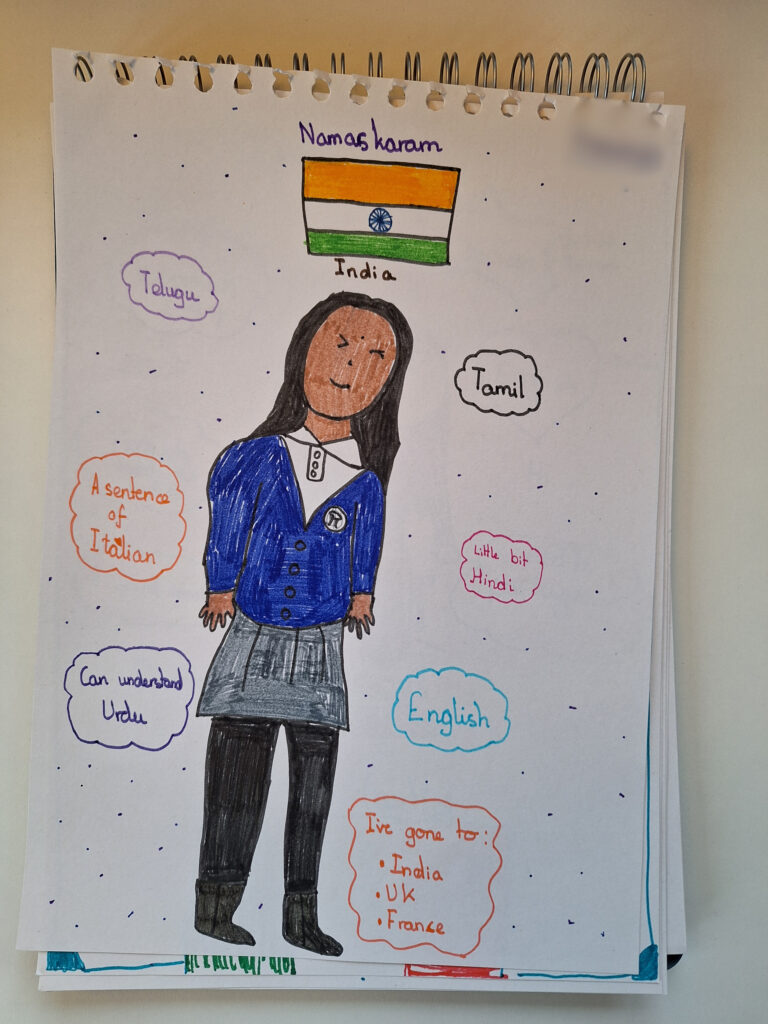
An example of a body language map, drawn by a year 5 pupil
When working to include a diverse set of audiences around a complex theme, researchers/practitioners can consider:
- When recruiting participants, try creating an accessible ‘about me/the research’ document to support your overarching information sheets.
- Consider creative ways that can be adapted to different audiences to test your research questions/area of interest. Be open to varying means of communication (verbal/written/performance/illustrative etc.)
- When working with community groups, remain flexible and adaptive to their needs. Try to organise interviews at their convenience, at a time and place that is practical.
What did we learn so far?
The opportunities made available through the research have demonstrated a range of engaging things happening in Nottingham to support and celebrate living heritages and cultures. What we know so far can only be taken from a surface-level analysis of the available data, and more will become clearer over the next few months of analysis:
- Young people want to get involved – School aged children are keen to engage and celebrate their living heritages and cultures, as well as their peers. This also includes being involved in organising and planning events and experience days.
- Community collaborations – If you are planning an event around culture and heritage, work closely with your local communities to enhance its delivery. Consider conversations with schools, parents/carers networks, arts spaces/artists, faith centres, local hospitality, heritage schools and centres, and more.
- Asking is better than assuming – Rightly, we want to try to include everyone and ensure everyone feels welcome. However, some people have expressed that they do not want the spotlight placed on them, particularly marginalised groups. Speak with people privately first to see if they would like to contribute or be involved with whatever you are planning.
- Physical spaces are strong assets – If you have a physical space, consider how you are using those locations. Think about the placement of the items you want your stakeholders to engage with; is the exhibited item in a narrow corridor, or up front and centre in a popular, regularly frequented room?
- Be creative/Offer up your space – Try to think creatively about how and where you feature your engagement activity, e.g., does a poetry event only need to be held in a bookshop, or can it take place in a variety of spaces? Consider how events such as fringe festivals use a variety of spaces to celebrate culture to diverse audiences and stakeholders. If you have a space, can you offer some of your public space to community groups and grassroots facilitators for temporary use (e.g., digital wall displays featuring a pop-up exhibition).
What’s next?
During the next few months, I will be applying a range of analysis methods to go deeper into the findings. These updates will be gradually shared over at the ChalleNGe cultural-education partnership website. I am always interested in hearing from you about how we can engage, safeguard and celebrate our living heritages and cultures. Please share your stories and experiences, or if you just want to learn more, contact me at jack.benjamin2023@my.ntu.ac.uk. Alternatively, you can follow the Celebrating Languages Project for more information.
Selected Bibliography
Braber, N., Howard, V. (2023) ‘Safeguarding language as intangible cultural heritage’, International Journal of Intangible Heritage, pp. 146-158
Chang, H. (2021). ‘Individual and Collaborative Autoethnography for Social Science Research’. In Adams, T.E., Holman Jones, S., & Ellis, C. (ed.), Handbook of Autoethnography. Routledge, pp. 53-65
Greenwood, V. (2024) Barm vs cob: Why Britain has so many names for a bread roll. BBC Future. Available from: https://www.bbc.co.uk/future/article/20240325-barm-vs-cob-why-britain-has-so-many-names-for-a-bread-roll (Accessed 13 April 2025)
Leavy, P. (2015). ‘Arts‑Based Practices: An Alternative Paradigm’. in Leavy, P. (ed.), Handbook of Arts-Based Research. Guilford Publications, 2nd edition, pp.11-30.
Rodriguez, J.K. and Ridgway, M., (2023) Intersectional reflexivity: Centering invocations and impositions in reflexive accounts of qualitative research. doi: https://doi.org/10.18753/2297-8224-4027
UNESCO in the UK (2026). Welcome to the Inventories of Living Heritage in the UK. UNESCO in the UK. Available from: https://livingheritage.unesco.org.uk/ (Accessed 08 April 2026)
Jack Benjamin is a Collaboratory PhD candidate.
- You can contact Jack at jack.benjamin2023@my.ntu.ac.uk
- Learn more about Jack Benjamin
- Learn more about my research