
Collaboratory 2026 PhD Project
Key Details
Project Title: Nature Based Wellbeing and Sustainable Resources: Community approaches to green prescribing in urban green spaces
Deadline:11:59pm, 30th November 2025
Host University: University of Nottingham
School/department: School of Engineering
Start date: Wednesday 1st April 2026
Funding offer: Tuition fees covered in full (worth approx. £15-17k across full PhD programme). Monthly stipend based on £20,780 per annum, pro rata, tax free.
Working hours: Full-time (minimum 37.5 hrs per week).
Working style: Primarily in-person at host university. Flexible working supported. Working pattern to be agreed between successful candidate and lead supervisor.
Project Supervisors
- Lead Academic Supervisor: Dr Katy Voisey (University of Nottingham)
- Academic Co-Supervisor: Dr Jenni Cauvain (Nottingham Trent University)
- Community Supervisor: Jules Selebin (Nottingham Community and Voluntary Service)
About The Project
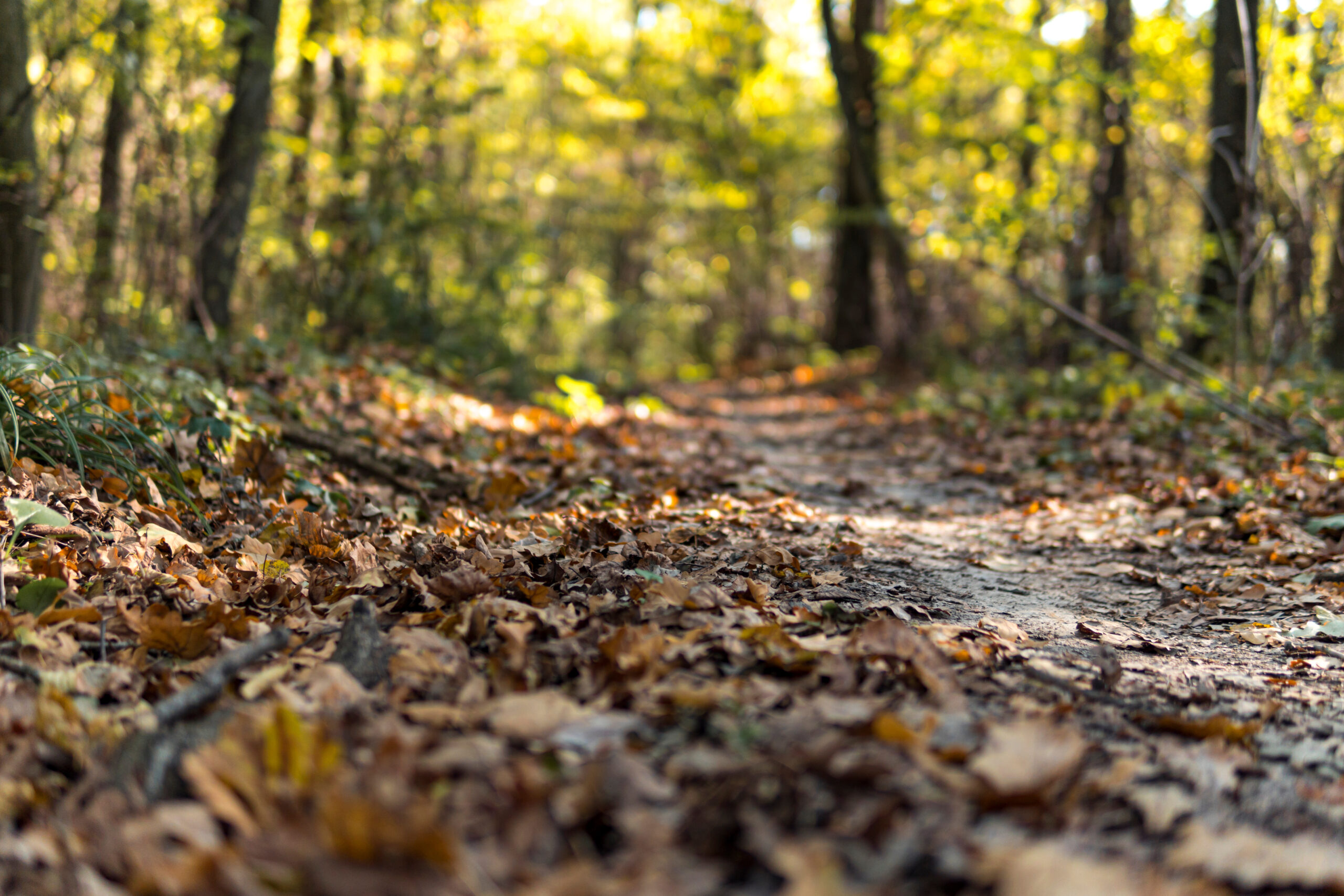
This PhD project will build on preliminary work to contribute to the growing academic research literature on nature-based solutions (NbS) whilst offering specificity and novelty around leaf gathering, both as a catalyst for community action and as an opportunity for sustainable resource use in the circular economy.
It is well accepted that engagement with nature provides human health and wellbeing benefits. Research shows that socio-economic deprivation is closely linked to poor health outcomes across all age groups (Kirkbride et al., 2024; Kivimäki et al., 2020; Remes, 2019). By leveraging nature-based solutions working with Nottingham’s unique resources – abundant trees and existing community networks – this project will explore the potential of a low cost model for improving public health, social resilience, and potential uses of fallen leaves as a new sustainable material. This PhD project brings together 3 specialisms to address important local issues of wellbeing and sustainability: Green prescribing to improve health and wellbeing, urban green spaces as a social asset, and materials science approaches to sustainable resources.
Preliminary scoping work, carried out as part of a 2025 Collaboratory Research Placement project, has confirmed a generally supportive attitude amongst the Nottingham public towards community leaf gathering activities, whilst also revealing that knowledge gaps exist around how diverse communities perceive leaf collection and volunteering, and also around how community based leaf gathering could support local institutional priorities (e.g. schools, waste management services, or green space/grounds maintenance). This raises important questions about how nature-based benefits could be maximised in areas like Nottingham and Nottinghamshire (Khan 2025).
Social Needs: The Nottingham Green Social Prescribing pilot, led by NCVS, connects residents with nature-based activities to improve mental health and wellbeing. As one of seven national test sites, it addresses rising mental health challenges, especially post-COVID, by reducing stress, anxiety, and isolation. It leverages Nottingham’s urban green spaces and community networks to offer inclusive, low-cost interventions. The green social prescribing programme addresses knowledge gaps, which exist around 1) awareness and accessibility, 2) integration into health systems, 3) data and evaluation, 4) capacity of green providers, and 5) equity and inclusion.
Environmental Needs: Nottingham’s extensive tree canopy produces a tremendous amount of leaf waste annually – some of this inevitably poses a hazard/nuisance, or ends up in municipal waste management. Knowledge gaps exist around the amount of leaf waste that is generated, collected and treated in Nottingham currently. Localised, sustainable, community uses of fallen leaves would increase environmental sustainability and support Nottingham’s carbon neutrality 2028 goals.
This project has been co-created with and is supported by researchers from University of Nottingham, Nottingham Trent University and partners at the Nottingham Citizens Voluntary Service. The successful candidate for this project will be enrolled at University of Nottingham.
Project Aims
The PhD aims to deliver a new, low cost, inclusive activity that enhances Nottingham’s volunteering provision around Nature-based Solutions (NbS) for community wellbeing and environmental sustainability. The PhD project will:
- Liaise with community groups to understand their operation and needs
- Set up a pilot leaf gathering group
- Showcase the pilot group to other community groups in Nottingham(shire) and beyond
- Investigate how leaf gathering activities can be tailored to the needs of diverse groups in varied socio-cultural contexts
- Develop methods of measuring the success and impact of leaf gathering and sustainable uses of collected leaves
- Propose mechanisms to assess the long-term viability of leaf collection and utilisation
- Develop a knowledge transfer toolkit for setting up community leaf gathering activities and associated tasks
- Collaborate with NCVS and other local institutions to identify applications for leaf gathering through volunteering to further social and environmental goals
Core Competencies
Category | Competencies | Assessed: Application (A), Interview (I) |
Comprehension and evaluation | Strong understanding of the project and its subject matter. | A / I |
Analytical, researcher mindset with keen attention to detail. | A / I | |
Communicate complex concepts with clarity and precision. | A / I | |
Able to identify connections, patterns, gaps, and irregularities in information/data. | I | |
Able to interpret data/information confidently with logic and empathy to derive meaning. | I | |
Social and emotional | Demonstrable experience of responding effectively to changing contexts, information and demands. | A |
Ability to persevere in the face of challenges/failures and to remain constructive in developing solutions. | A | |
Demonstrable passion for learning with clear drive and curiosity to undertake this specific research project. | A / I | |
Willingness to immerse oneself in the research subject matter and make a contribution to new knowledge through a PhD. | A / I | |
Strong desire to make a positive community impact through the research. | A / I | |
Willingness to think deeply about complex concepts and engage with academic ideas and theory. | A / I | |
Preparedness and potential for success | Experience of working, collaborating and communicating effectively with different stakeholders. | A |
High level of self-motivation and ability to work with minimal guidance. | A / I | |
Strong organisational and time-management skills with the ability to balance and prioritise multiple tasks. | A / I | |
Ability to identify potential challenges and complexities and thoughtfully consider possible solutions. | A / I | |
Able to identify the technical, personal, or professional skills required for a task and take action to develop these. | A / I | |
Community Context | Genuine desire to undertake community-engaged research over more traditional approaches to research. | A |
Understand the impact of and need for the inclusion of diverse experiences and points of view in research. | A / I | |
Appreciation/understanding of the importance of community insight and experience in the generation of new knowledge. | A / I | |
Awareness/understanding of the broader societal context related to the subject matter of the project. | A / I |
Project-Specific Competencies
| Essential | Assessed: Application (A), Interview (I) | Desirable | Assessed: Application (A), Interview (I) |
|---|---|---|---|
| Passion for urban nature and community-based sustainability initiatives | A / I | A desire to develop an understanding of sustainable leaf uses in material science | A / I |
| Interest in social research and developing research in partnership with communities. | A / I | Awareness of urban sustainability challenges from social and environmental perspectives. | A / I |
| Ability to analyse and present information systematically | A / I | Experience of community engagement in Nottingham either via voluntary or paid roles | A / I |
| Strong IT literacy in contemporary online platforms (such as Microsoft Office 365 packages) | A / I | Experience of report writing and research like activities (e.g. work projects with written outputs, undergraduate dissertation) | A / I |
References for Further Reading
- The Big Green Book https://www.nottinghamcvs.co.uk/projects/greenspace/big-green-book
- Natural England https://naturalengland.blog.gov.uk/2022/04/12/social-prescribing-the-power-of-nature-as-treatment
- Coventry, Peter A, JenniferV.E. Brown, Jodi Pervin, Sally Brabyn, Rachel Pateman, Josefien Breedvelt, Simon Gilbody, Rachel Stancliffe, Rosemary McEachan, PiranC.L. White (2021) Nature-based outdoor activities for mental and physical health: Systematic review and meta-analysis, SSM – Population Health, Volume 16, https://doi.org/10.1016/j.ssmph.2021.100934
- Fallen autumn leaves are a valuable resource – here’s how to make the most of them, Muhammad Ali and Anita Carey, The Conversation, November 23, 2023 https://theconversation.com/fallen-autumn-leaves-are-a-valuable-resource-heres-how-to-make-the-most-of-them-218217