
Cohort 2026 PhD Project
About The Project
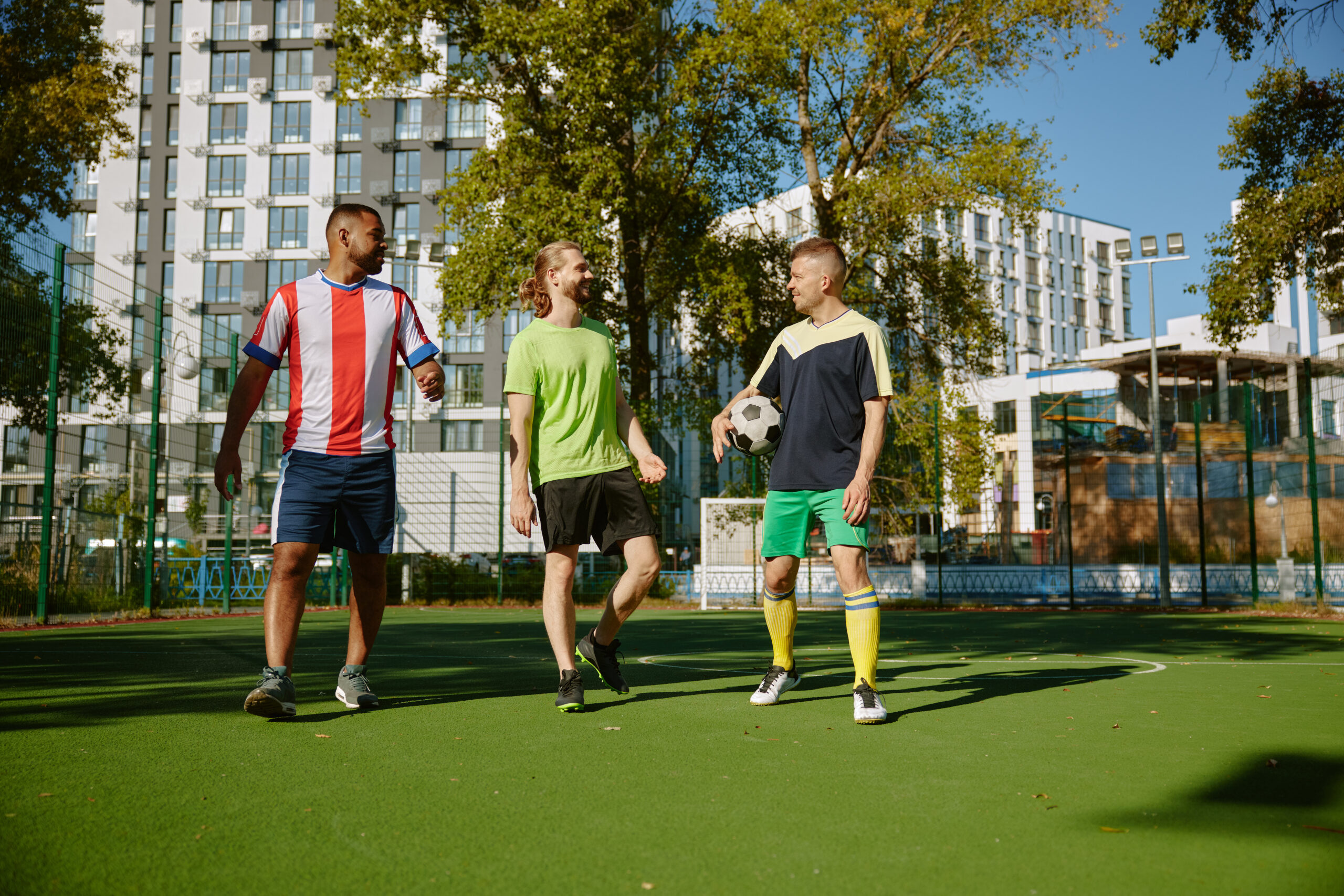
Walking football has grown rapidly in recent years, with an estimated 60,000 people now playing regularly in England (The Guardian, 2023), reflecting its appeal as an inclusive and accessible form of exercise for middle-aged and older adults. With roots in traditional team sport and adapted rules to enhance safety and accessibility, it offers a distinctive setting where physical health, mental well-being, and social identity converge. This project explores the health and social transformations experienced by participants in open-access walking football programmes delivered in areas of Nottingham facing high levels of deprivation, in partnership with Nottingham Forest Community Trust (NFCT).
The project will use a mixed-methods design embedded in a participatory framework. A steering group of researchers, community organisations, delivery partners, and link workers will provide oversight, while Patient and Public Involvement and Engagement (PPIE) events will involve participants and stakeholders in co-designing and refining the study. The first arm will examine health and wellbeing among current walking football participants, exploring effects on physical and mental health, social experiences, and belonging. The second will establish a new walking football provision, delivered as a 3-month intervention with a 3-month follow-up, to evaluate outcomes for new participants. Across both arms, quantitative health assessments, qualitative interviews, and ethnographic observation will capture walking football as a lived, collective experience shaped by community dynamics and social identity.
Bridging public health, sociology, and exercise science, this research critically evaluates walking football as both an exercise intervention and a site of community-making and health citizenship. Unlike many health programmes that struggle with uptake, walking football sustains engagement: 69% of Walking Football Association survey respondents had played for over two years, driven by camaraderie, routine, and shared enjoyment. Players emphasise social and mental wellbeing benefits, alongside the chance to keep playing the sport they love (Walking Football Association, 2022). Its inclusive, low-threshold format offers promise for groups facing barriers to conventional fitness programmes. Building on our established research demonstrating the safety and low injury risk of walking football (Price et al., 2025a, b), this study offers new insights into its wider community and public health value, providing actionable evidence for health professionals, local authorities, and community sport organisations.
This project has been co-created with and is supported by researchers from Nottingham Trent University, University of Nottingham and partners at Nottingham Forest Community Trust.
Project Aims
The overall aims of the project are:
- A knowledge exchange event to share findings and best practices with community partners, practitioners, and policymakers.
2. A detailed understanding of the physical, mental, and social health outcomes associated with participation in walking football.
3. Publication of primary research articles and an implementation paper detailing the setup, delivery, and community integration of walking football programmes.
4. Practical recommendations to inform and enhance walking football initiatives across Nottingham and similar urban areas.
5. Collaboration with existing partners within The FA, including Professor Dame Robina Shah, to support evidence-informed policy development, such as the FA Walking Football Game Plan.
Project Team
- PhD Candidate: Joseph Love
- Lead Academic Supervisor: Dr Philip Hennis (Nottingham Trent University)
- Academic Co-Supervisor: Dr Matthew Jacques (University of Nottingham)
- Academic Co-Supervisor: Prof Clifford Stevenson (Nottingham Trent University)
- Community Supervisor: Colin Eley (Nottingham Forest Community Trust)