
Cohort 2025 PhD Project
About The Project
The role of the environment on children’s health is still unclear. A lot of research on environmental health focuses on the outdoor environment, but people, especially children, spend a large proportion of their lives at home, indoors. Our homes are, in quite a literal sense, a barrier between the outdoor environment and our indoor environment. So, understanding how the quality of housing controls the indoor environment, and therefore how the environment affects children’s health, is important. It’s clear that factors such as building quality may be affected by social deprivation. Therefore, understanding these factors help us to reduce health inequalities, especially in an area such as Leicester, Leicestershire and Rutland (LLR) where there are places facing extreme poverty, particularly in parts of Leicester city. Leicester is in the bottom quarter of UK Counties for Asthma prevalence, childhood hospital admissions for asthma, infant and child mortality rate. In contrast, Leicestershire has moderate to good childhood health relative to the wider England population. Reducing these health inequalities is vital.
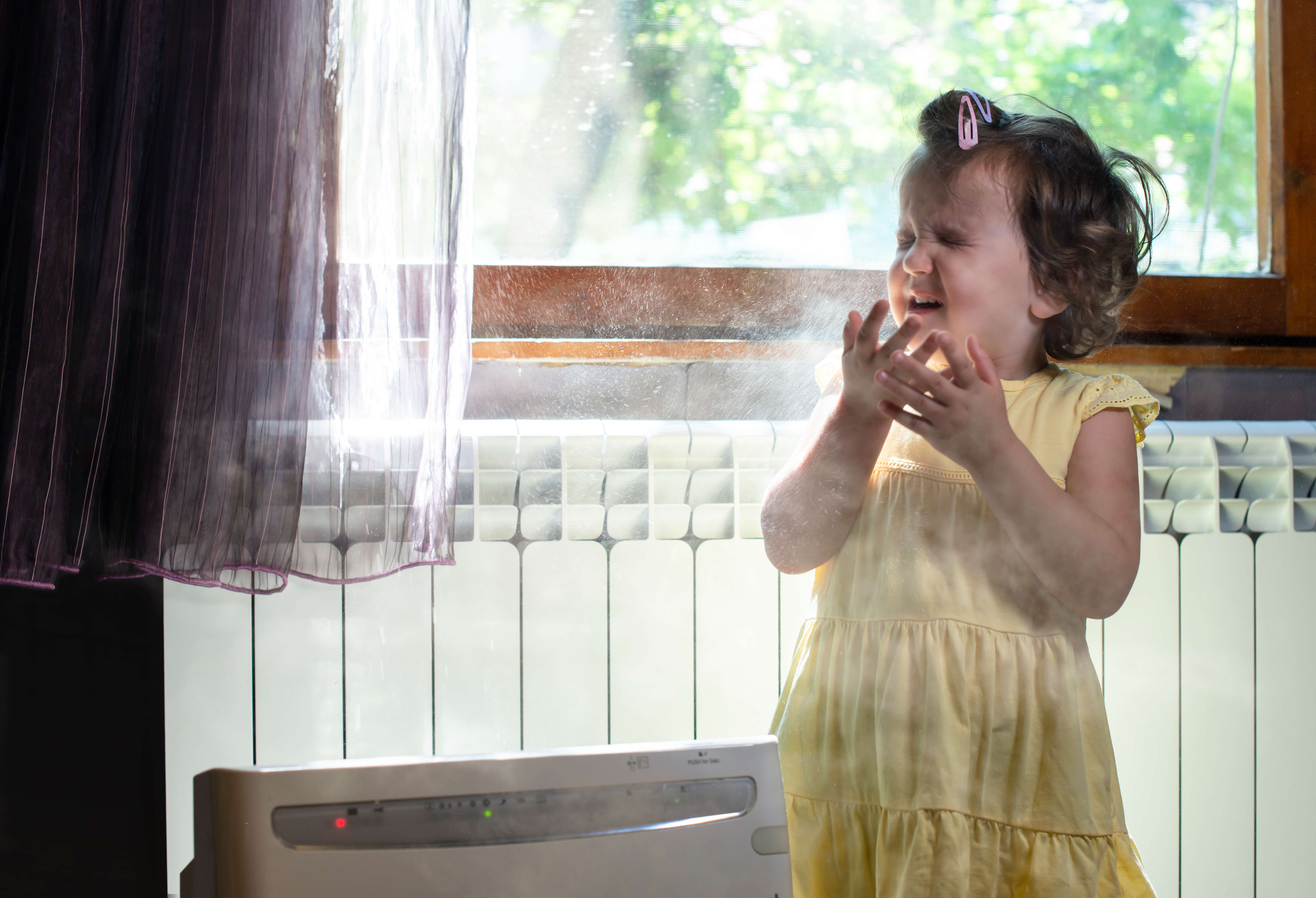
The indoor environment can affect child health in many ways. The heat, humidity and air pollution we directly experience while inside can all affect health. Temperature has been shown to affect childhood mortality, respiratory diseases such as asthma and allergic diseases such as eczema. Additionally, mould growth in homes is affected by the outdoor environment, building materials and behaviours such as opening windows to air the house out. Exposure to mould can increase the risk of asthma and other diseases in children. Overall, the East Midlands has the second highest proportion of non-decent homes in England, with over 15% of homes being substandard.
This project will explore how housing materials and behaviours such as heating use interact with the outdoor environment to control the indoor environment within homes. AI methods will then be used to find areas in LLR that are particularly susceptible to unhealthy indoor environments, linking these to child health data. These combined datasets will be used to examine how important the indoor environment actually is in controlling the health of children. These results will be used to work with local charities and local government to produce guidance for the most cost-effective ways to improve housing and, therefore, childhood health in LLR.
This project has been co-created and is supported by researchers from the University of Leicester, Loughborough University and partners at Midlands Asthma and Allergy Research Association. The successful candidate for this project will be enrolled at the University of Leicester.
Project Aims
The overall aims of the project are:
- To evaluate the risks of mould growth and overheating for the housing stock in Leicester, Leicestershire, and Rutland, and determine what methods are most cost-effective for mitigating these risks. The focus will be on the housing of lower-income families.
- To quantify the effects of winter and summer climate, housing stock, and indoor behaviours on the hospitalisation rate of children in Leicestershire.
- To improve the health of children in Leicester, Leicestershire, and Rutland by improving the indoor environment in homes.
Project Team
- PhD Candidate: Amber Vayani
- Lead Academic Supervisor: Dr Tim Lucas( University of Leicester)
- Academic Co-Supervisor: Professor David Allinson (University of Loughborough)
- Academic Co-Supervisor: Dr Sarah Seaton (University of Leicester)
- Community Supervisor: Steve Watson (Midlands Asthma and Allergy Research Association)