
Collaboratory 2027 PhD Project
Key Details
Project Title: Supporting People and Pets: Food Banks, Food Insecurity, and Wellbeing in Nottingham and Nottinghamshire
Deadline:11:59pm, 29th November 2026
Host University: University of Nottingham
School/department: Faculty of Social Sciences
Start date: Thursday 1st April 2027
Funding offer: Tuition fees covered in full (worth approx. £15-17k across full PhD programme). Monthly stipend based on £21,805 per annum, pro rata, tax free.
Working hours: Full-time (minimum 37.5 hrs per week).
Working style: Primarily in-person at host university. Flexible working supported. Working pattern to be agreed between successful candidate and lead supervisor.
Project Supervisors
- Lead Academic Supervisor: Professor Pru Hobson-West, University of Nottingham
- Academic Co-Supervisor: Dr Juliet Wakefield, Nottingham Trent University
- Academic Co-Supervisor: Professor Kate Millar, University of Nottingham
- Community Supervisor: Helen Lloyd, Arnold Food Bank
About The Project
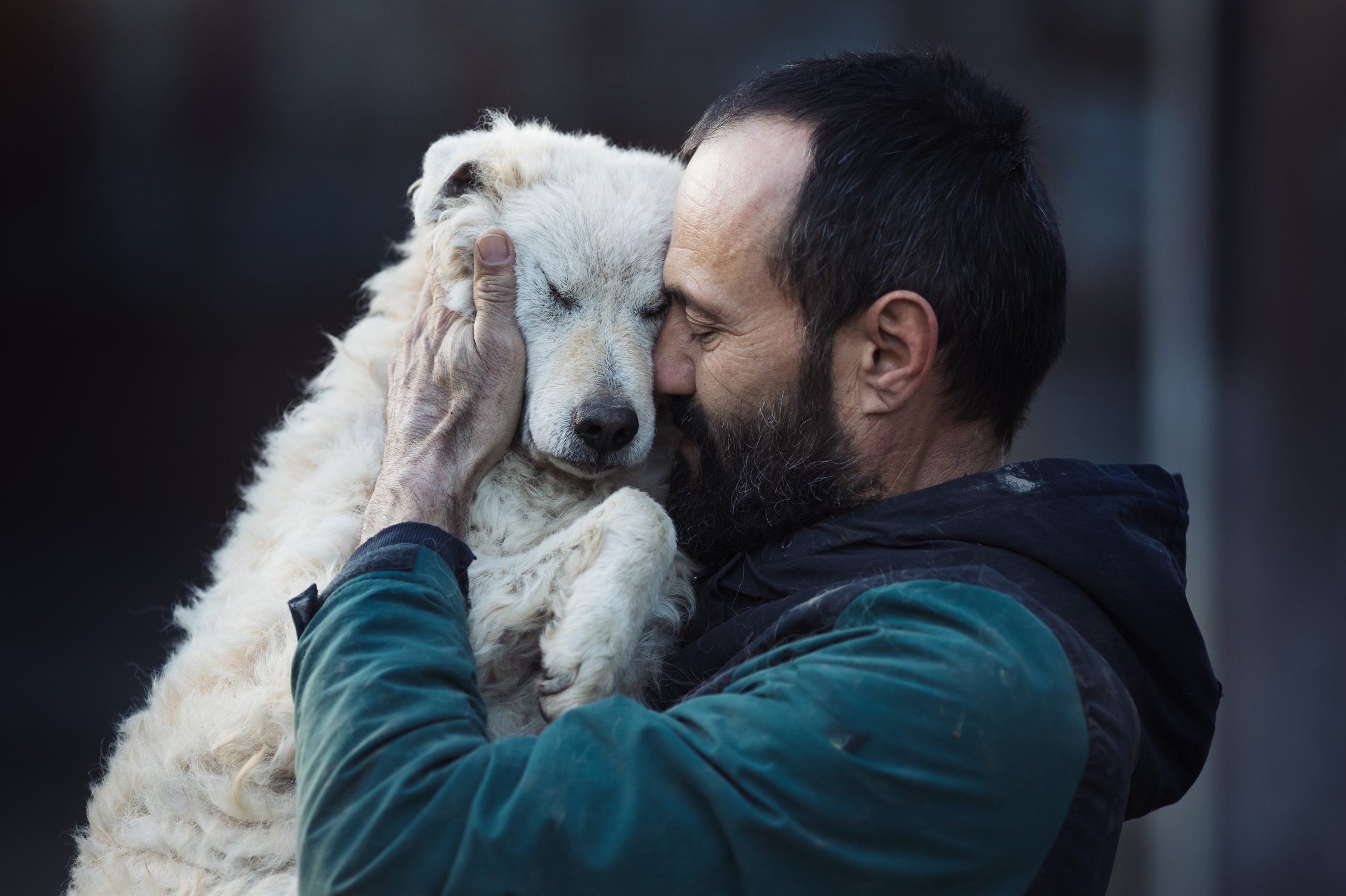
Food insecurity affects many residents of Nottingham and Nottinghamshire, and foodbanks play an important role in supporting people through difficult times. For many households, pets are valued members of the family and a source of emotional support. However, when resources are limited, meeting the needs of both people and their animals can lead to difficult choices. Despite growing awareness of this issue, very little research has explored how food insecurity affects households with companion animals, or the role foodbanks play in supporting them.
This PhD project will investigate how foodbanks across Nottingham and Nottinghamshire currently support residents and their pets, and the experiences of people who seek this help. It will examine whether challenges already linked to foodbank use, such as access, eligibility and stigma, are felt differently, or more strongly, by people caring for animals. Drawing on a One Health perspective, which recognises the connected wellbeing of people, animals and communities, the research will explore the links between food insecurity, pet ownership, and human health and wellbeing.
A core principle is that the research will be done with communities rather than to them. Working closely with people with lived experience of food insecurity, foodbank staff and volunteers, animal charities and local organisations, the researcher will use participatory and sensitive approaches that put local residents’ voices and priorities at the centre, with particular care given to experiences of dignity, stigma and support.
The findings will be used to co-produce practical recommendations and resources for foodbanks and other local services. Bringing together perspectives from sociology, psychology and food ethics, the project will generate new evidence on an under-researched issue and support more inclusive, compassionate services for people experiencing food insecurity across Nottingham and Nottinghamshire.
This project has been co-created with and is supported by researchers from the University of Nottingham and Nottingham Trent University, and partners at Arnold Food Bank. The successful candidate for this project will be enrolled at the University of Nottingham.
Project Aims
- Identify the current role of food banks in supporting residents of Nottingham and Nottinghamshire, including their companion animals
- Analyse the extent to which known challenges for food bank service users (including access and/or stigma) are experienced differently by those seeking support for companion animals
- Understand and explore the interrelationships between food insecurity and human and companion animal health and wellbeing
- Co-produce recommendations and support materials for foodbanks in Nottingham and Nottinghamshire, and identify implications for wider local service provision
Core Competencies
Category | Competencies | Assessed: Application (A), Interview (I) |
Comprehension and evaluation | Strong understanding of the project and its subject matter. | A / I |
Analytical, researcher mindset with keen attention to detail. | A / I | |
Communicate complex concepts with clarity and precision. | A / I | |
Able to identify connections, patterns, gaps, and irregularities in information/data. | I | |
Able to interpret data/information confidently with logic and empathy to derive meaning. | I | |
Social and emotional | Demonstrable experience of responding effectively to changing contexts, information and demands. | A |
Ability to persevere in the face of challenges/failures and to remain constructive in developing solutions. | A | |
Demonstrable passion for learning with clear drive and curiosity to undertake this specific research project. | A / I | |
Willingness to immerse oneself in the research subject matter and make a contribution to new knowledge through a PhD. | A / I | |
Strong desire to make a positive community impact through the research. | A / I | |
Willingness to think deeply about complex concepts and engage with academic ideas and theory. | A / I | |
Preparedness and potential for success | Experience of working, collaborating and communicating effectively with different stakeholders. | A |
High level of self-motivation and ability to work with minimal guidance. | A / I | |
Strong organisational and time-management skills with the ability to balance and prioritise multiple tasks. | A / I | |
Ability to identify potential challenges and complexities and thoughtfully consider possible solutions. | A / I | |
Able to identify the technical, personal, or professional skills required for a task and take action to develop these. | A / I | |
Community Context | Genuine desire to undertake community-engaged research over more traditional approaches to research. | A |
Understand the impact of and need for the inclusion of diverse experiences and points of view in research. | A / I | |
Appreciation/understanding of the importance of community insight and experience in the generation of new knowledge. | A / I | |
Awareness/understanding of the broader societal context related to the subject matter of the project. | A / I |
Project-Specific Competencies
| Essential | Assessed: Application (A), Interview (I) | Desirable | Assessed: Application (A), Interview (I) |
|---|---|---|---|
| Knowledge and appreciation of food insecurity, human-animal relationships and how these connect to people’s health and wellbeing, with a willingness to build knowledge in these areas. | A / I | Experience of working, volunteering or engaging with issues around food insecurity, foodbanks, pets or animal welfare, in any setting. | A / I |
| Experience of working with sensitive issues, or a demonstrable ability to engage appropriately and respectfully with people when discussing difficult or personal experiences. | A / I | Prior experience of working with local community groups, especially those including people from diverse socioeconomic backgrounds. | A / I |
| A demonstrable appreciation of the diversity of worldviews, values and ways of knowing, and the ability to work respectfully with people from a wide range of backgrounds. | A / I | Experience of having in-depth conversations with people and drawing out common themes, for example through interviews, casework, advice work, support roles or community research. | A / I |
| Strong computer skills and confident written communication, with experience of producing clear, longer pieces of writing, such as reports, articles or essays. | A / I | An interest in bringing together ideas from different fields, such as sociology, psychology and ethics, to understand social issues, alongside a background or interest in the social sciences. | A / I |
References for Further Reading
- Lawson, E. (2026) ‘People are choosing between feeding their pets or themselves’. BBC news. Available at https://www.bbc.co.uk/news/articles/clyd28jzzgpo
- Muldoon, J. C., & Williams, J. M. (2024). When having a pet becomes a luxury you can no longer afford. Anthrozoös, 37(5), 881-904. https://doi.org/10.1080/08927936.2024.2351276
- Rauktis, M. E., Hoffman, B., Smith, S., et al (2025). Using human-centered design to address pet food security: A case study of Ellie’s Pet Food Pantry. Journal of Participatory Research Methods, 6(3). https://doi.org/10.35844/001c.140845
- Rombach, M., & Dean, D. L. (2021). Just love me, feed me, never leave me: Understanding pet food anxiety, Feeding and shopping behavior of US pet owners in covidian times. Animals, 11, 3101. https://doi.org/10.3390/ani11113101